
ASK TEMPLE!
Click "Ask Temple" to submit a question and it will be sent to Temple! She will answer as many as she can.
Webinars & Conferences
Upcoming Conferences
July 29 - Aurora, CO
August 14 - Hershey, PA
August 18 - Webinar
August 20 - New Orleans, LA
August 23 - Attica, MI
September 10 - Dallas Forth Worth
September 11 - Knoxville, TN
September 15 - Missoula, MT
September 19 - Cincinnati, OH
November 19 - Memphis, TN
November 20 - Jonesboro, AR
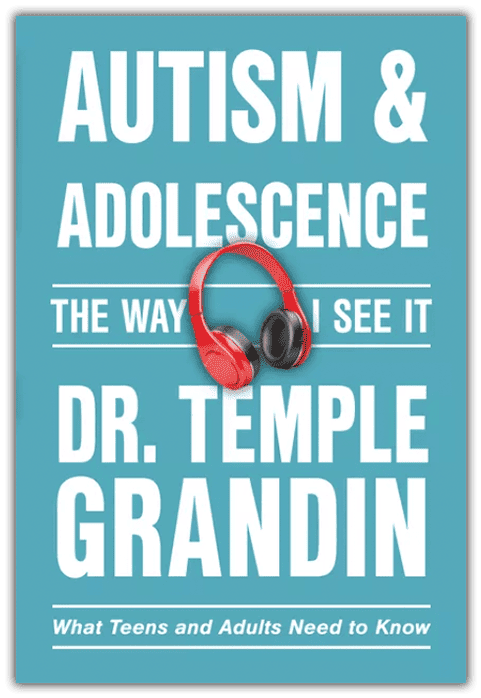
Temple's Latest Books!

Don't Miss This!
Visual Thinking

A MUST LISTEN!!
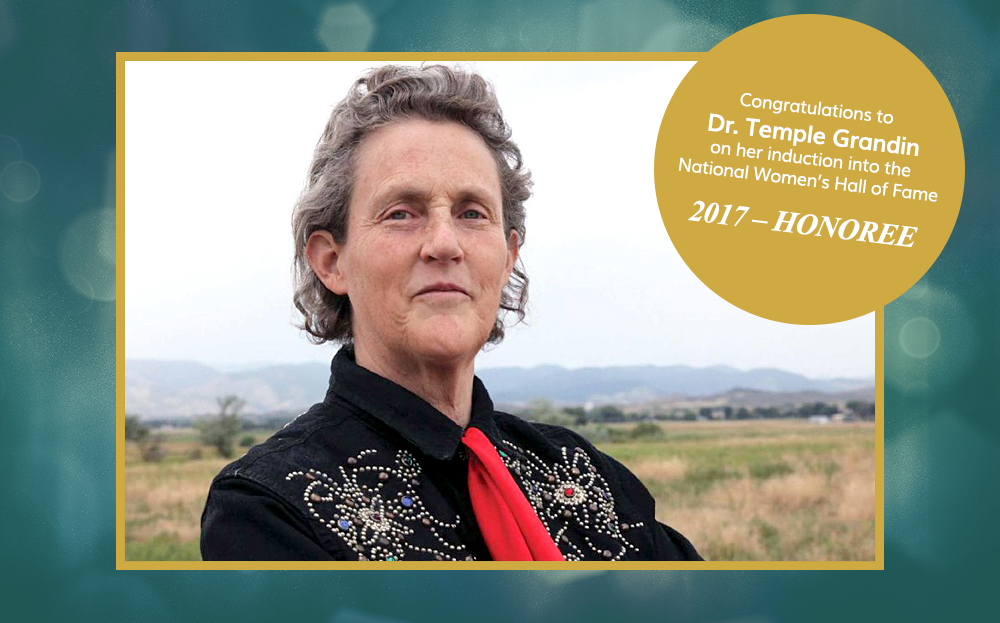
Congratulations to Temple and her induction into the American Academy of Arts and Sciences!
Click here and below to watch!
Temple Grandin earns Dole Leadership Prize!
Learn More Here!
Order Your Copy Today!
Use Connections and Back Doors to Find Good Jobs
Half of all good jobs for everybody are obtained through informal contacts with co-workers, friends, or contacts through a teacher. One person gets a great job with a major tech company because he took a class with a professor who knew somebody at the company. Another person, who was on the spectrum, recently got an excellent job at a food safety lab because his parents had met one of the managers. The lab loves his attention to detail when he receives food samples for testing. It is essential to follow the exact procedures to prevent one sample from cross contaminating another.
Kids Need to Learn to Figure Things Out
At autism meetings, both grandfathers and grandmothers often come up to me and tell me that they discovered that they were on the autism spectrum when the grandchildren were diagnosed. In most cases, the grandparents had good jobs in engineering, accounting or computer science. They were often married and had children. At a tech conference last year, a grandfather who was a computer programmer came up to me and said, “I was one of th is having many problems?
Is Autism the Price for a Human Brain?
The same genetic mechanism that make humans have a large brain may be the same genes that cause autism and schizophrenia. Researcher J.M. Sikela, at the Colorado School of Medicine and V.B. Searles at the University of California have found that copy number variation in the chromosome locus 1q21 may cause both autism and schizophrenia. Copy numbers of genetic code are like volume controls for different traits. A particular piece of genetic code may be either duplicated many times or have copies deleted. Extra copies may cause autism and a larger head and too few copies may cause schizophrenia. Just the right amount of copies will create a so-called normal human brain.
Both Autism and ADHD Have
Working Memory Problems
There is lots of crossover between ASD (Autism Spectrum Disorder) and ADHD. I have talked to many parents where their child’s diagnoses has been switched back and forth between autism and ADHD. Tara Stevens and her colleagues at Texas Tech University found that 59% of children who were diagnosed with ASD also had ADHD. This was more likely to occur in fully verbal children diagnosed after age six. Canadian researchers have also found that there were similarities in brain circuitry problems in both ASD and ADHD. Individuals with both labels are also more likely to have problems with working memory.
Too Much Screen Time has a
Bad Effect on Child Development
At conferences, more and more parents of a recently diagnosed teen or elementary school child have told me that they may be on the autism spectrum. In some cases, they have an official diagnoses and in other cases, they do not. Almost all the parents who have been told they are on the autism spectrum have worked successfully in a variety of occupations. The question is: why was their life relatively successful and their child is now having problems with a lack of friends, bullying or is extremely hyper and anxious? In most of these cases, the child had no early childhood speech delay as a toddler. When I was in college, I had friends that today would be labeled as having autism.
Using Teachable Moments to Learn
Manners, Social Skills, and Language
I was brought up in the 1950’s and my mother and all the other mothers in the neighborhood used “teachable moments” to teach children correct behavior. When a social or manners mistake was made, Mother NEVER screamed “No” or “Stop it.” Instead, she calmly gave me the instruction of what I should do. Below are some examples.
Tips for Success in Academia
When You Are Differenet
I learned a lot by reading my student evaluations of my teaching. There are two kinds of critical evaluations. They are: 1) Ones that provide constructive suggestions on how to improve my teaching and 2) Nasty comments. I learned that I had to disregard the nasty comments and learn from the constructive criticism. Early in my career a student who was in more than one of my classes commented that I always gave the same lecture. The mistake I had made was using the same introductory slide for two different lectures in the two classes. I immediately made the introductory slides different.
Easing the Transition to High School
Surprises cause fright. The best way to ease the transition to high school is to have the child visit the school before he or she enters in the fall. The best scenario would be meeting the new teachers and visiting a class in the spring, before he/she enrolls in the fall. If visiting the school is not going to be possible, then visiting the school’s webpage will help make it more familiar. You could also look up news articles and other publications about activities in the new school.
The Most Fun in the World is Making Stuff
Recently I went to a wonderful Makes Fair called STEAM fest in Boulder, Colorado. STEAM stands for Science, Technology, Engineering, Art, and Math. The emphasis was on making things ranging from high tech robots to building things from low-tech cardboard boxes. There were a number of kids at this event that had autism. They had a great time cutting up large cardboard boxes and making forts. To safely cut heavy corrugated cardboard, tools were made from half a hacksaw blade with a duct tape handle.
Kids Must Learn Work Skills
At almost every autism conference, I have either a parent or a teacher say “he is 21, how do I get him to stop playing video games in the basement” or “he is 18 and he is in the bedroom for six hours a day playing games.” Many of these game addicts are not having good outcomes. Too many of them are ending up on social security and continue to play games all day.
How to Use 1950’s Methods for Teaching Social
Skills to Children that Worked for Me
When I was in elementary school during the 1950’s all children were taught basic social skills the same way. When I visited a friend’s house and I made a table manners mistake, I was corrected by my friend’s mother. The methods and rules were the same at home, at the neighbors, and at school. All corrections were calm. There was no screaming or yelling.
Summer Jobs for Older Kids with Autism
When I was a teenager and later on when I was going to college, summer jobs and internships taught me both independence and the responsibility of doing a job. For fully verbal individuals, it is essential that they learn how to do tasks on a schedule for people outside the family. Mother set up my first job when I was 13.